
How to Set Up a Productive Daily Schedule for Online Homeschool Programs
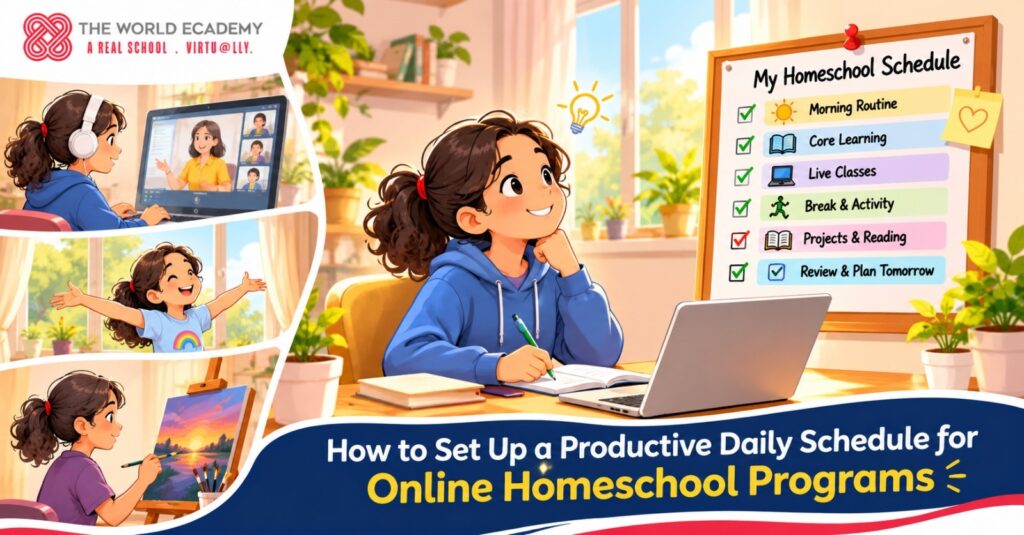
Creating a consistent and effective daily schedule for online homeschool programs is one of the most important steps families can take to support academic success at home. Without a clear structure, learning time can easily drift, motivation can fade, and both parents and children may feel overwhelmed.
The good news is that building a productive study routine for students does not need to be rigid or stressful. With the right approach, an online homeschooling schedule can provide the structure children need while remaining flexible enough to suit individual learning styles, family commitments and academic goals.
At The World Ecademy, we believe that education should adapt to the learner. A well-organised learning routine, supported by structured virtual classes and personalised academic guidance, can help students make the most of their online schooling experience.
Why a Daily Homeschool Routine Matters
A well-planned daily homeschool routine provides children with the predictability they need to focus and learn effectively. When students know what to expect each day, they spend less time wondering what comes next and more time engaging with their lessons.
A strong homeschooling routine for kids also helps parents manage their own schedules, reducing the daily stress of deciding what to study and when.
Consistency is an important foundation of successful online learning. Whether you are new to homeschooling or looking to improve your current approach, refining your schedule can make a significant difference to your child’s academic progress and overall wellbeing.
Step 1: Assess Your Family’s Needs and Goals
Before building a schedule, take time to understand your child’s learning style, energy patterns and academic requirements.
Ask yourself:
- At what time of day does my child concentrate best?
- How many hours of structured learning does the programme require?
- What extracurricular activities or appointments need to be accommodated?
- How much independent work can my child manage compared to guided instruction?
Answering these questions provides the foundation for a realistic and sustainable homeschool daily schedule for students.
It is also important to consider your child’s age and grade level. Younger learners may benefit from shorter learning sessions, while older students may need longer periods for assignments, revision and independent study.
Step 2: Build a Practical Daily Homeschooling Schedule
A productive online homeschooling schedule should balance core academic subjects with breaks, physical activity and creative learning.
Here is an example of a daily timetable parents can adapt to their circumstances.
| Time | Activity | Purpose |
| 8:00 AM – 8:30 AM | Morning routine and breakfast | Prepare for the learning day |
| 8:30 AM – 10:00 AM | Core subjects such as Maths and English | Focus on important academic lessons |
| 10:00 AM – 10:20 AM | Break and movement | Refresh and improve concentration |
| 10:20 AM – 11:30 AM | Online lessons or live classes | Participate in structured learning |
| 11:30 AM – 12:15 PM | Lunch break | Relax and recharge |
| 12:15 PM – 1:30 PM | Science, Social Studies or projects | Encourage practical and creative learning |
| 1:30 PM – 2:00 PM | Reading or independent study | Develop independent learning habits |
| 2:00 PM – 2:30 PM | Review and daily wrap-up | Reinforce the day’s key concepts |
This timetable is only a starting point. The best daily schedule for online homeschool programs is one that can be adjusted according to the student’s curriculum, live class timings and individual learning needs.
Step 3: Apply Smart Time Management for Homeschool Students
Effective time management for homeschool students goes beyond filling a timetable with activities. It involves teaching children to take responsibility for their learning.
Consider these practical strategies:
- Use timers: Short, focused study sessions followed by breaks can help children maintain concentration.
- Prioritise challenging tasks: Schedule demanding subjects when your child is most alert.
- Build in buffer time: Avoid overloading the timetable. Leave room for assignments that take longer than expected.
- Review the week ahead: Spend a few minutes every Sunday discussing upcoming lessons, activities and important deadlines.
- Encourage independent learning: Give children opportunities to complete suitable tasks without constant supervision.
These habits gradually help students become more organised, confident and independent learners.
Step 4: Organise the Home Learning Environment
Knowing how to organise homeschooling at home is as much about the learning environment as it is about scheduling.
A dedicated learning space, even a quiet corner of a room, signals to children that it is time to focus. Keep books, stationery, headphones and other learning materials organised and within reach to avoid unnecessary interruptions.
Digital learning platforms can also make a difference. The World Ecademy’s connectED Learning Management System provides access to timetables, learning resources, homework scores and communication tools.
Having these resources available in one place helps students and parents keep track of learning activities and academic progress.
Step 5: Balance Flexible Online Schooling with Structure
One of the greatest advantages of flexible online schooling is that families can organise learning around their individual circumstances.
However, flexibility should not mean the absence of routine. The goal is to create a daily homeschool routine that accommodates family commitments while maintaining consistent learning habits.
At The World Ecademy, students attend structured, live online classes supported by learning resources and academic guidance. This combines the organisation of a conventional school with the convenience of learning from home.
Parents should also make space for physical activities, hobbies, creative interests and extracurricular learning. A balanced routine supports development beyond academic performance.
Tips to Keep Your Homeschooling Routine on Track
Even a well-planned schedule may need adjustments. These simple practices can help families maintain consistency:
- Display the daily schedule where your child can easily see it.
- Celebrate small achievements to maintain motivation.
- Schedule regular discussions about what is working and what needs improvement.
- Allow older children to participate in planning their timetables.
- Avoid comparing your child’s learning pace with others.
- Seek guidance from teachers or academic support teams when necessary.
Remember that a productive schedule should support learning, not create unnecessary pressure.
Build a Better Learning Routine with The World Ecademy
Setting up a productive study routine for students is an ongoing process. As children grow, their academic requirements, interests and learning preferences change. Their schedules should evolve accordingly.
The World Ecademy offers personalised online schooling from Pre-Primary to Grade 12, combining live interactive classes, experienced educators, structured learning pathways and extracurricular programmes.
With flexible learning options and its connectED platform, TWE helps students and parents stay organised while balancing academic development with personal interests and essential life skills.
Looking for an online schooling programme that supports your child’s learning needs and daily routine? Explore The World Ecademy’s programmes and speak with our admissions team to discover the right learning pathway for your child.
Visit: https://theworldecademy.com/
Explore Admissions: https://theworldecademy.com/admission/
More guides for parents

How The World Ecademy Guides Families Through the BOSSE Admission and Registration Process
Navigating an open schooling system for the first time can feel overwhelming for families. Between understanding eligibility requirements, gathering the right documents and completing…
Read the article
How to Understand the Differences Between NIOS, BOSSE, and Pearson Edexcel for Online Learners
Choosing the right education board is an important step when you want to pursue online education or follow a flexible learning pathway. With several…
Read the article
No School Bus, No Bell, No Corridor: A Different Kind of School Day
For most of us, school had a sound. The hiss of the bus doors at the end of the lane. The bell that cut…
Read the article